Timeline: a typical roof replacement in the UK can take from a few days to a fortnight depending on roof size, materials and weather, and here you’ll find a clear, step‑by‑step timeline so you can plan around scaffolding, material lead times and contractor schedules; you’ll learn how inspections, removal, repairs, installation and final checks usually sequence to minimise disruption to your household.
Key Takeaways:
- Most straightforward domestic roof replacements take 2-5 working days on site: scaffold erection ~1 day, stripping and re-tiling 1-3 days, and scaffold removal ~1 day; larger or complex roofs (slate, multiple levels, structural repairs) can take 1-2 weeks.
- From initial survey to completion typically allow 2-6 weeks to cover surveys, ordering materials and scheduling; bespoke materials, planning requirements or busy seasons can extend lead times to several months.
- Weather delays and unexpected issues (rotted timbers, insulation upgrades, structural defects) commonly add extra days or weeks, so include contingency in the programme and agree variations with your contractor.
Types of Roof Replacement
You’ll encounter five main replacement types that dictate timescales, costs and structural work: asphalt shingles, natural slate, metal standing seam, clay tiles and flat membrane systems. Typical durations range from a single day for small flat roofs to two weeks for complex slate jobs, while costs run roughly £30-£180 per m2 depending on material and labour. Your choices affect scaffold needs, waste removal and statutory notifications.
- Asphalt shingles are light, quick to fit and cost-effective for smaller properties.
- Slate and clay tiles are long‑lasting but increase labour time and structural checks.
- Metal roofs fit fast, often in 1-3 days, and suit low pitches with good durability.
- Flat membranes require careful detailing around penetrations and can be completed in 1-4 days.
- Assume that scaffolding, a skip and a qualified team will be needed for most full replacements.
| Asphalt shingles | 15-30 years; ~£30-£60 per m2; 1-3 days for a 100 m2 roof |
| Slate | 75-200 years; ~£80-£180 per m2; 5-14 days depending on complexity |
| Metal (standing seam) | 40-70 years; ~£60-£120 per m2; 2-5 days, lightweight and quick |
| Clay tiles | 60-100 years; ~£70-£150 per m2; 3-7 days, heavier and slower to lay |
| Flat membrane (EPDM/TPO) | 20-40 years; ~£25-£80 per m2; 1-4 days, requires great detailing |
Asphalt Shingles
You’ll find asphalt shingles are relatively rare on UK pitches but practical for quick, low‑cost replacements; a typical 100 m2 semi‑detached roof can be stripped and re‑shingled in 1-3 days by a two‑ to three‑person crew. Lifespan is usually 15-30 years, materials cost about £30-£60 per m2, and you should check that your roof pitch exceeds 12.5° and that adequate underlay and ventilation are installed.
Slate Roofing
You should allow 5-14 days for a full slate replacement on an average home, reflecting slower laying rates and the need for bespoke detailing; costs commonly range £80-£180 per m2 and natural slate often lasts 75-200 years. Structural appraisal is important because slate can weigh 40-80 kg per m2, and you’ll want a qualified slater for correct fixing, leadwork and ventilation.
Welsh slate typically gives the longest life, often 150-200 years, while Spanish slate is more economical with 80-150 years; you’ll notice differing fixings – copper nails or hooks – and these affect longevity. Practical examples: a two‑storey detached with valleys and dormers can take 7-14 days and require extended scaffold hire, whereas a simple bungalow might be completed in 5-7 days. You should plan for specialist lead or lead‑free flashing details and periodic slate replacement rather than wholesale renewal when only local damage occurs.
Step-by-Step Roof Replacement Process
Process stages and typical durations
| Stage | Typical duration & notes |
|---|---|
| Initial inspection | 30-60 minutes for an average mid-terrace; longer if attic access or structural checks required |
| Material removal | 1-3 days depending on roof size, number of layers and crew size; includes waste removal |
| Repairs & underlay | Half a day to 2 days for timber repairs, new felt/membrane and ventilation works |
| Installation of new roof | 1-5 days depending on complexity, tile type and weather; ridge, flashings and leadwork included |
| Clean-up & final inspection | Half a day for clearance, nails sweep and client sign-off |
Initial Inspection
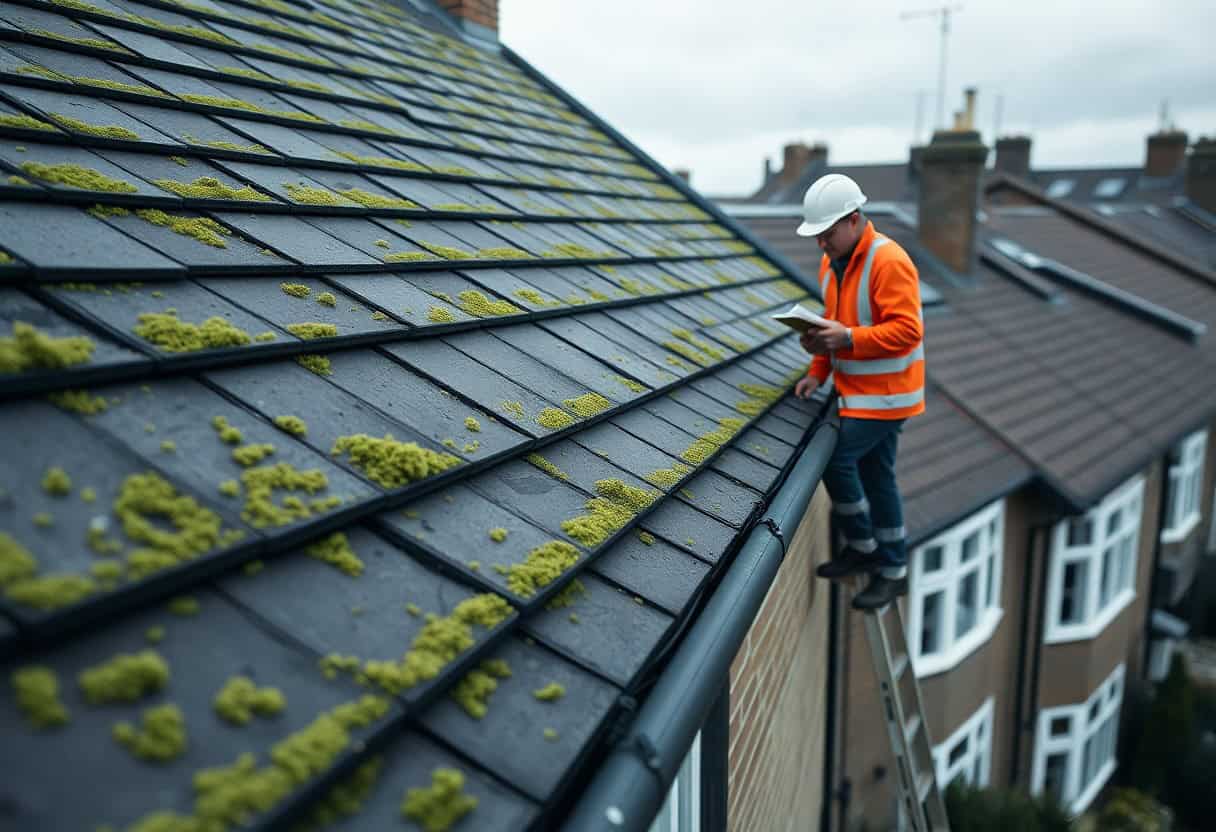
Your roofer will carry out a detailed survey using ladders or a drone, checking decking, rafters, flashings and ventilation; typically this takes 30-60 minutes for an average property, with a written quote returned within 24-48 hours and any structural concerns flagged for further engineer assessment.

Material Removal
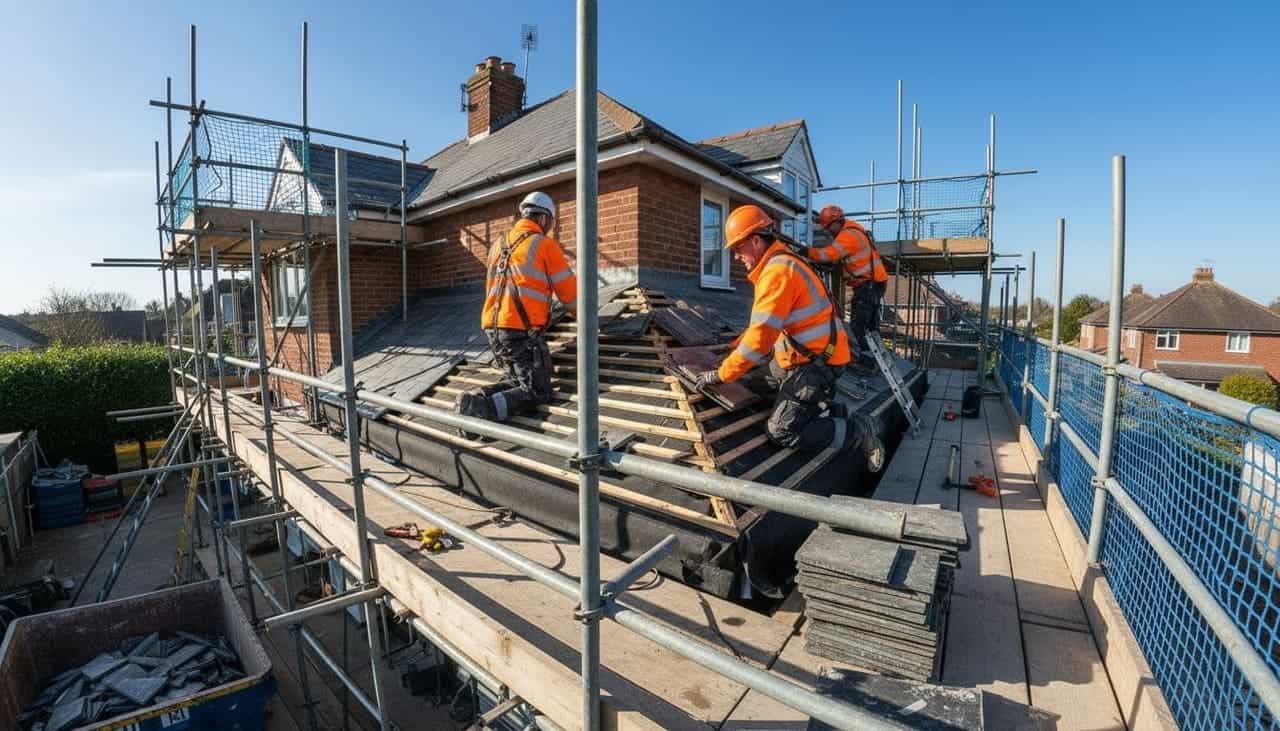
Removal usually involves stripping tiles or slates back to the decking, taking 1-3 days for a standard semi-detached house with a 3-6 person crew; you should expect scaffold, tarpaulins and a waste skip positioned nearby to keep your garden and driveway clear.
For a 100 m² roof you’ll commonly generate 3-6 m³ of material, so contractors often book a 4-6 m³ skip or use a hoist for pallets; if asbestos or historic lead is present, you must instruct a licensed specialist which can add several days and require permits, while timber repairs found during stripping typically add 0.5-2 days depending on joist or rafter replacement.
Installation of New Roof
Installation begins with new underlay and counter-battens, followed by battens and the chosen tile or slate system; most standard installs for a 100 m² roof take 1-4 days, with lead flashings, ridge tiles and ventilation fitted and a final check for weatherproofing and fixings.
When using concrete interlocking tiles you’ll fit roughly 9-12 tiles per m² (so about 900-1,200 tiles for 100 m²), while natural slate may be lighter but slower to lay; allow for mortar curing and lead detailing-these finishing tasks plus gutter reconnection and snagging commonly add a half to full day, and poor weather can delay tilesetting or adhesive cures by 24-48 hours.
Factors Affecting Timeline
Several elements determine how long a roof replacement takes; common ones include:
- Roof size and pitch
- Materials chosen (slate, concrete tile, metal)
- Access and scaffolding requirements
- Structural repairs like rotten timber
- Planning permissions or listed-building consents
- Weather and seasonal daylight
Any unforeseen rotten timbers or planning delays can add several days to the schedule.
Roof Size and Complexity
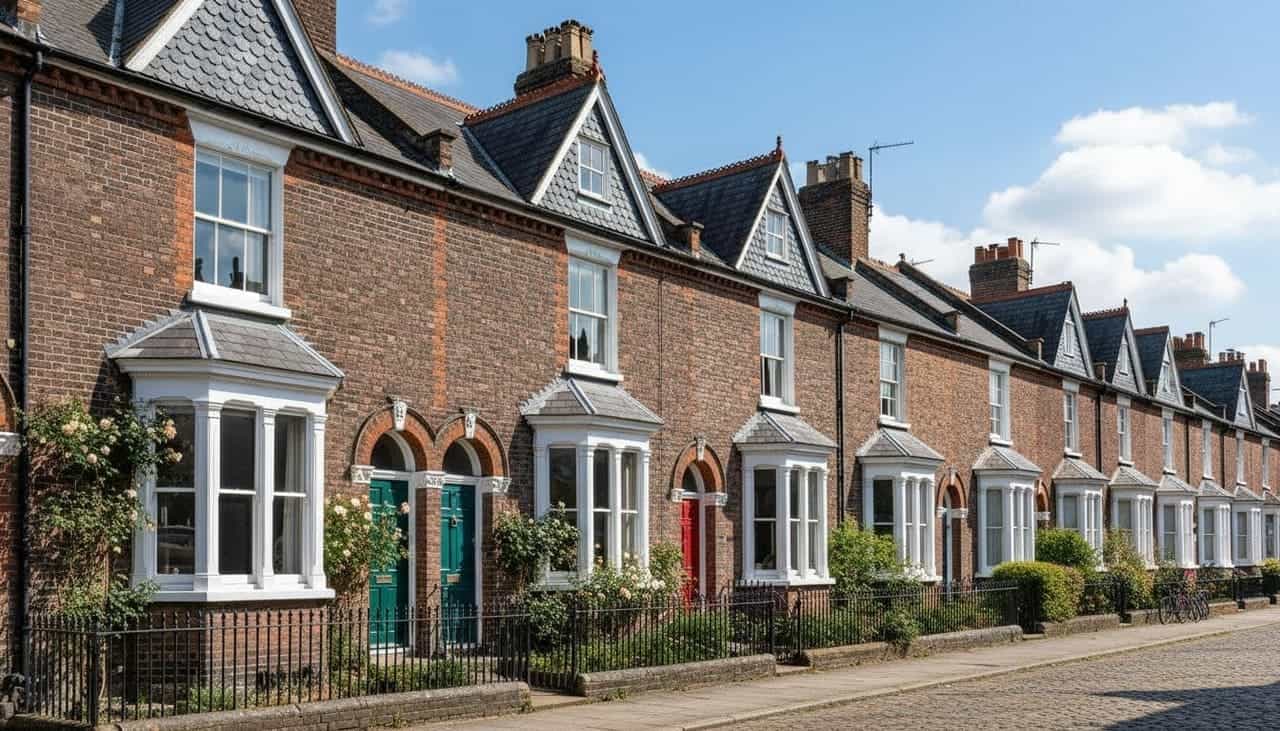
You should expect a small terraced roof of around 50-80 m² to take 1-3 days with a two-person crew; a semi-detached at 80-120 m² typically needs 2-5 days. Complex roofs with valleys, multiple hips, dormers or a steep pitch commonly add 2-4 days, and working at height increases labour time. Poor access that forces manual material handling can add another day or two to your programme.
Weather Conditions
You will find weather is a frequent cause of delay in the UK; persistent rain halts exposed tiling and slate work, and winds above about 35 mph prevent safe lifting and scaffolding work. Contractors prefer April-September windows where possible; a week of sustained storms can add 1-3 days to a short job and proportionally more on larger projects.
You can ask your contractor about weather contingency: reputable firms build 10-20% extra time into the programme and use tarpaulins, breathable underlays and temporary fixings to protect the structure overnight. In one London case a 5-day re-roof included two buffer days and required rapid sheeting after an afternoon storm, avoiding water damage; agreeing contingency days in your contract reduces surprises.
Tips for a Smooth Roof Replacement
Plan logistics early: scaffolding typically takes a day to erect, a 3-bed semi with concrete tiles usually finishes in 2-4 days, and complex jobs or listed buildings can run to 7-10 days. You should book skips and parking permits in advance, confirm waste removal and noise windows, and agree milestones with your contractor. After the final inspection, sign off only when you’ve checked the roof, gutters and guarantees.
- Confirm scaffold dates and site access with the council or neighbours.
- Arrange a skip and clear driveway space; expect a 6x4m footprint for skips.
- Protect plants and remove garden furniture at least 5m from work areas.
- After completion, walk the roofline with the contractor and get written snags and warranties.
Hiring the Right Contractor
Ask for three detailed quotes that list materials, labour and VAT, and check public liability insurance of at least £5m and employer’s liability; verify membership of the National Federation of Roofing Contractors (NFRC) or equivalent. You should inspect past jobs, call referees, confirm a start date within 2-6 weeks, and limit upfront deposit to around 10-20% with staged payments tied to milestones.
Preparing Your Home
Move cars 10-15m away, clear loft spaces because installers will need attic access, and protect interiors by removing fragile items from walls and conservatories; you should arrange a safe room for valuables and keep pets offsite during noisy phases. Notify neighbours of likely noise between 8:00 and 17:00 and display contact details for the site foreman.
Further practical steps include unbolting or securing satellite dishes and solar PV panels-if panels are present, hire MCS-certified contractors for removal and reinstallation; ensure a 1m clear zone around loft hatches, seal off heating flues during roof vents works, and photograph the roof before and after for warranty claims and potential insurance disputes.

Pros and Cons of Roof Replacement
| Pros | Cons |
|---|---|
| Increased lifespan of roof-new tiles/slates 25-50 years | High upfront cost-typical UK replacements range widely (£3,000-£10,000+) |
| Improved energy efficiency with upgraded insulation (10-30% heating savings) | Temporary disruption-scaffolding, noise and restricted access for 2-14 days |
| Higher property value and kerb appeal (often a 5-10% boost) | Possible planning or conservation area consent required |
| Better weatherproofing and reduced leak risk | Waste removal and skip hire add extra costs (£200-£500 typical) |
| Modern materials, warranties and reduced maintenance | Hidden defects (rotted timbers, structural issues) can increase time and cost |
| Opportunity to upgrade ventilation and install solar or PV more effectively | Need to remove or reinstall existing fittings-solar panels, aerials, chimneys |
| Compliance with current building regulations | Weather delays-wind or heavy rain can add several days to the schedule |
| Improved safety for occupants and installers | Scaffold and street licences for terraced homes can be costly and time-consuming |
Benefits of New Roofing
Immediate benefits include a longer-lasting roof (25-50 years for quality materials), reduced heating bills when you add modern insulation (often 10-30% savings), and a clearer path to higher resale value-estate agents often note a 5-10% uplift after a full replacement; in addition, warranties of 10-30 years give you financial protection against early failure.
Potential Drawbacks
Expect disruption: most straightforward tile replacements take 2-5 days, while complex roofs or slate can take 7-14 days, and scaffolding plus noise will affect daily life; upfront costs and additional fees for skip hire, scaffold hire (£400-£1,200), or planning applications can significantly increase the final bill.
Delays commonly stem from weather-heavy rain or high winds can pause works for 1-7 days-and hidden issues frequently appear once the old covering is removed; for example, damp or rotten timbers may require joist repairs costing £500-£2,000 and adding several days, while terraced properties often need street licences that lengthen the schedule by a few weeks. You should factor contingency time and a 10-20% budget buffer for unforeseen repairs.
Common Questions About Roof Replacement
Most full pitched roof replacements for an average 100-150 m² house take 2-5 working days on site, with scaffolding typically erected in 1-2 days beforehand and removed within 1-3 days after completion. Lead times for contractors range from 2-8 weeks, warranties commonly span 10-30 years depending on materials, and planning permission is rarely required unless your property is listed or in a conservation area; you should plan for short disruptions and clear access for trades and waste removal.
How to Determine When to Replace
Age and condition guide the decision: concrete tiles often last 30-50 years, natural slate 80-100 years and felt flat roofs 10-20 years, so you should replace when tiles are slipping, large numbers are cracked, there are recurring leaks or visible sagging. If you’re spending over about £500 a year on patch repairs, or if inspections show rot in the rafters or significant membrane failure, replacement usually makes more financial sense than further repairs.
Average Costs Involved
A typical full replacement for a 3-bed semi in the UK usually falls between £5,000 and £9,000; smaller terraced houses can be £3,000-£6,000, while larger or more complex roofs exceed £10,000. Expect scaffolding to add roughly £500-£2,000 and waste removal £300-£1,000. Flat roof replacements are often cheaper, frequently ranging £1,000-£4,000 depending on membrane type; you should obtain multiple quotes to compare scope and guarantees.
Costs vary with size, pitch and complexity: materials cost per square metre typically runs about £25-£50 for concrete tiles and £60-£120 for natural slate, while labour rates commonly sit around £150-£250 per roofer per day. Additional charges for lead flashing, chimney alterations, valley work, upgraded loft insulation (£500-£1,200) or restricted access can push totals up, and listed-building requirements or unusual pitches will substantially increase both time and price.
Summing up
So you can typically expect a roof replacement in the UK to take from two to five days for an average terraced or semi‑detached home, and one to two weeks for larger or more complex properties; weather, material lead times, scaffolding and unexpected repairs can extend this, so agree a clear schedule and contingency with your roofer.
FAQ
Q: How long does a typical roof replacement take in the UK?
A: Times vary by property size and roof type. For a small, straightforward tiled roof on a semi-detached house expect 2-5 days of on-roof work; an average three-bedroom detached house typically takes 4-10 days. Large, complex roofs with multiple valleys, dormers or slate tiling can take 2-3 weeks. Thatch and specialist slate reroofs often take longer and require skilled teams, sometimes several weeks. These figures cover the physical replacement once scaffolding is in place but do not include lead times for quotes, scheduling or unexpected structural repairs.
Q: What are the typical stages of a roof replacement and how long does each stage take?
A: A typical programme includes: 1) Survey and detailed quote – 1-14 days depending on contractor availability; 2) Scheduling and materials order – 1-4 weeks (longer for special slates or leadwork); 3) Scaffolding erection – usually 1 day; 4) Strip and inspect (remove old covering and check timbers) – 1 day for average roofs; 5) Structural repairs or reboarding (if joists/boarding are rotten) – 1-3 days depending on extent; 6) Underlay, battens and insulation installation – 0.5-1 day; 7) Tiling/slating, ridge and hip work – 1-7 days depending on roof area and complexity; 8) Flashings, leadwork, gutters and finishing – 0.5-2 days; 9) Site tidy, scaffolding removal and final inspection – 1-3 days. Combine these stages to form a realistic programme and ask your contractor for a written schedule with contingencies.
Q: What commonly causes delays and how should I plan for them?
A: Weather is the most frequent cause of delay – prolonged rain or high winds can halt work for days. Other causes include discovering rotten timbers or structural defects that need additional materials and labour, long lead times for special slate, tiles or bespoke lead flashings, access problems that slow scaffold erection, planning or Building Control requirements for structural changes, and shortages of skilled labour during busy periods. Older properties may also reveal asbestos sheeting requiring licensed removal. To plan: allow a contingency of 1-2 weeks (or 10-30% extra time for large or specialist roofs), agree a clear contract with a phased programme and payment schedule, instruct early to secure materials and trades, and ensure the contractor carries appropriate insurance and building control liaison. Keep neighbours informed and clear access to minimise on-site delays.